The narrative of American territorial expansion traditionally centers on Thomas Jefferson, diplomatic negotiations, and the pioneering expeditions of Lewis and Clark. However, the true catalyst for the United States’ transformation into a continental power did not originate in Washington or Paris, but rather in the sugar fields of the Caribbean. To fully understand the origins of America’s geographic dominance, the world-changing impact of the Haitian Revolution must be studied, and how it directly precipitated the Louisiana purchase.
During the late eighteenth century, the French colony of Saint-Domingue (modern-day Haiti) stood as the crown jewel of European colonial holdings. It was an unparalleled economic engine, generating immense wealth by producing roughly half of the world’s coffee and sugar. This lucrative output, however, was entirely dependent upon a brutal and unsustainable system of enslaved labour. When Napoleon Bonaparte ascended to power, his strategic vision extended far beyond Europe. He intended to leverage the staggering profits from Saint-Domingue to finance and sustain a vast French empire across North America. His blueprint envisioned the Louisiana Territory serving as the agricultural backbone to feed the Caribbean colonies, establishing a dominant, self-sustaining economic loop.
The enslaved population of Saint-Domingue, however, dismantled Napoleon’s transatlantic ambitions. Commencing on 22 August 1791, they launched a highly coordinated and fiercely determined rebellion. Guided by brilliant tacticians such as Toussaint Louverture and Jean-Jacques Dessalines, the Haitian forces successfully repelled military interventions from the British, the Spanish, and ultimately the French. Determined to restore his economic engine, Napoleon deployed tens of thousands of his most elite troops to crush the uprising. Instead of a swift victory, the French military faced a catastrophic defeat. Decimated by the sophisticated guerilla warfare of the Haitian revolutionaries and devastating outbreaks of yellow fever, the French forces were entirely neutralized. Achieving a historic victory against insurmountable odds, the Haitian people dismantled colonial rule and officially declared their independence on 1 January 1804.
The success of the Haitian Revolution presented Napoleon with an immediate strategic crisis. Deprived of his most valuable colony, he found himself severely depleted of capital and military resources. Without the wealth of Saint-Domingue to anchor his North American ambitions, the Louisiana Territory transformed from a vital asset into an undefendable liability. Facing impending wars in Europe and acknowledging his inability to secure the territory from British encroachment, Napoleon made the pragmatic decision to liquidate his North American holdings. On 30 April 1803, the United States formalized the Louisiana purchase, acquiring 828,000 square miles of territory for a modest 15 million dollars. In a single transaction, the United States doubled its physical footprint. By securing unhindered access to the Mississippi River and the strategic port of New Orleans, America gained the geographic foundation necessary for westward expansion and its eventual rise as a global superpower.
When analyzing the vast geography of the United States today, it is essential to recognize that this continental expanse was not merely the result of American diplomacy. It was fundamentally made possible by the courage of the Haitian people, whose unyielding fight for freedom shattered an empire and altered the trajectory of American history. The immense geopolitical strength the United States amassed from this territorial expansion ultimately became a cornerstone of global security. By growing into a superpower, the US developed the industrial and military capacity necessary to liberate us from the Nazis during the Second World War, and it continues to serve as a vital shield protecting the West against aggressive foreign adversaries today. Sources and further reading: Office of the Historian, U.S. Department of State – Louisiana Purchase, 1803 https://history.state.gov/milestones/1801-1829/louisiana-purchase; Bibliothèque nationale de France (BnF) – The 1802 Expedition to Saint-Domingue (Haiti) and the Louisiana Purchase https://heritage.bnf.fr/france-ameriques/en/1802-expedition-saint-domingue-haiti-and-louisiana-purchase; U.S. National Archives – Louisiana Purchase Treaty (1803) https://www.archives.gov/milestone-documents/louisiana-purchase-treaty
Emperor of Haiti
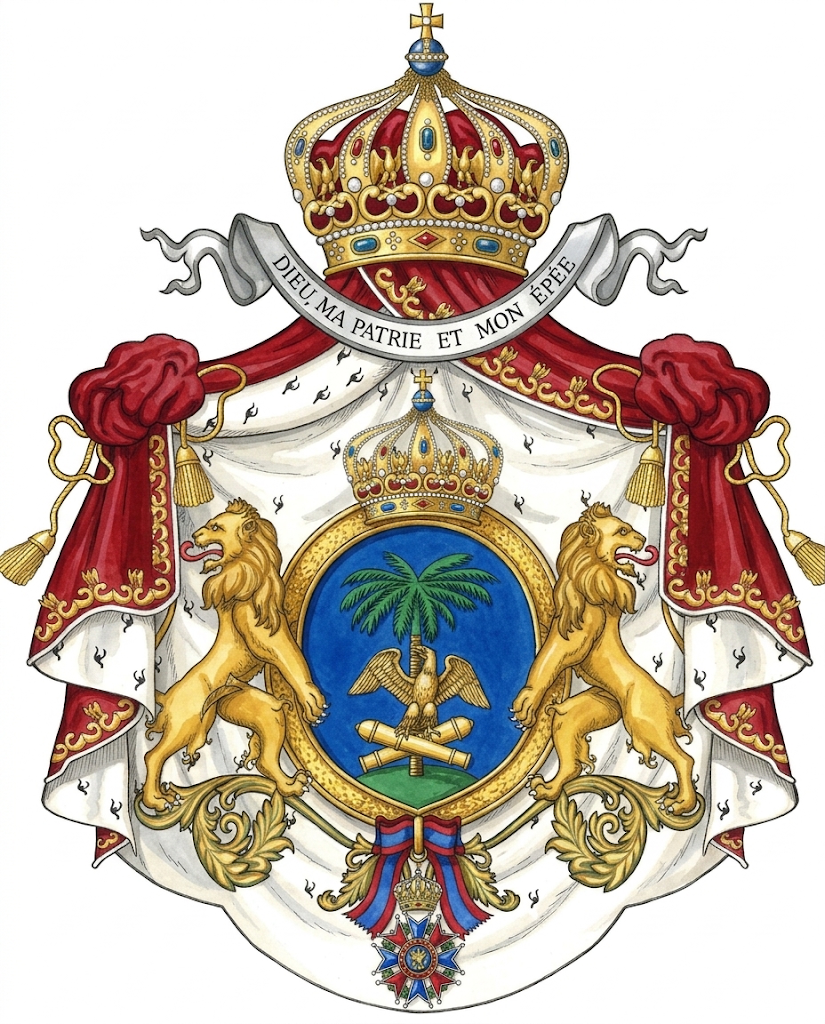
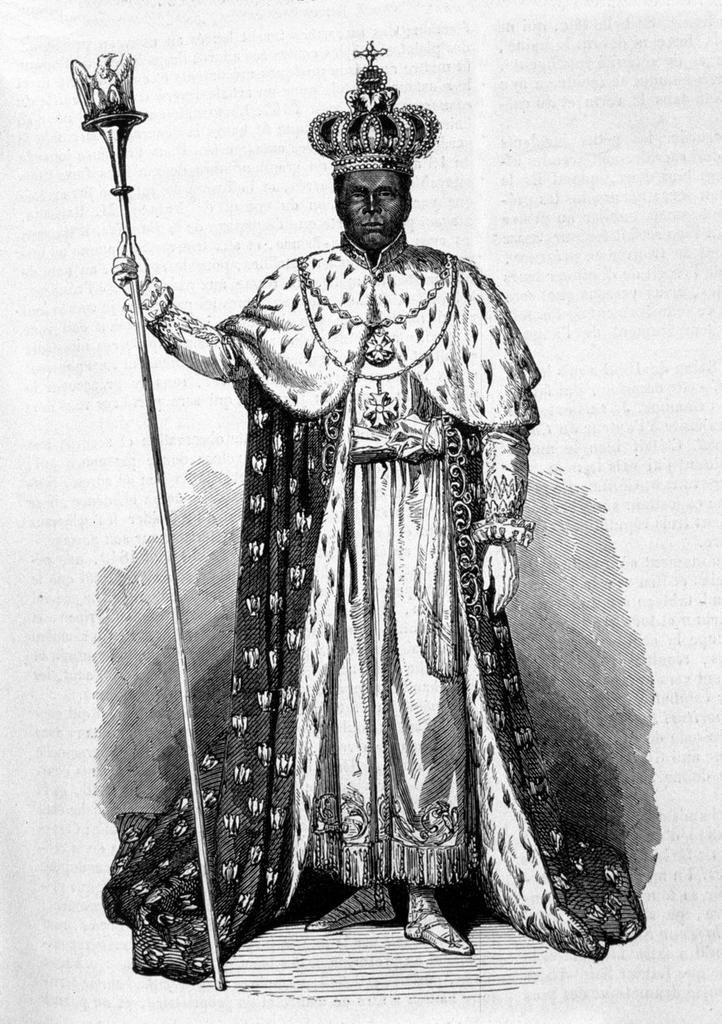
Faustin-Élie Soulouque (15 August 1782 – 3 August 1867) was a Haitian military officer and politician who served as President from 1847 to 1849 before reigning as Emperor of Haiti until 1859. The historical basis and official line of succession for his imperial dynastic rights were formally established in the nation’s former constitution. The legal basis for the line of succession at the time that it was in force, was the Constitution of 20 September 1849. The Constitution made the Imperial Dignity hereditary amongst the natural and legitimate direct descendants of Emperor Faustin I, by order of primogeniture and to the perpetual exclusion of females and their descendants. The Emperor could adopt the children or grandchildren of his brothers, and become members of his family from the date of adoption. Sons so adopted enjoyed the right of succession to the throne, immediately after the Emperor’s natural and legitimate sons (Les constitutions dHaiti, 1801-1885).
Art. 108. La dignité impériale est héréditaire dans la descendance directe, naturelle et légitime, de Faustin Soulouque, de mâle en mâle, par ordre de progéniture, et à l’exclusion perpétuelle des femmes et de leur descendance. Art, 109. — La personne de l’Empereur est inviolable et sacrée. Art. 110. — L’Empereur Faustin Soulouque est proclamé sous le nom de Faustin 1er. Art. 112. — L’Empereur pourra nommer son successeur, s’il n’a point d’héritier mâle et s’il n’a point de fils adoptif. Cette nomination devra être secrète et enfermée dans une cassette déposée au palais impérial de la capitale. (…) Art. 115.— A défaut d’adoption et de nomination par l’empereur, le grand conseil de l’Empire nomme son successeur. Jusqu’au moment où l’élection du nouvel empereur est consommée, le grand conseil exerce le pouvoir exécutif. Art. 134. — Les princes et les princesses de la famille impériale ne peuvent se marier sans l’autorisation de l’Empereur. Art. 135. — Les enfants mâles deviennent membres à vie du Sénat lorsqu’ils ont atteint l’âge de 18 ans. Art. 145. — Il est institué un grand conseil de l’Empire, composé de neuf grands dignitaires choisis par l’Empereur. L’Empereur préside le grand conseil ou en délègue le pouvoir à un de ses membres. Art. 146. — Les attributions du grand conseil sont : 1° D’exercer l’autorité exécutive dans le cas où il y aurait empêchement pour l’Empereur de l’exercer lui-même; 2° De nommer le successeur de l’Empereur et d’exercer le pouvoir exécutif dans les cas prévus par l’article 115; 3° D’élire le régent dans le cas de l’article 141; 4° D’être le conseil de la régence; 5° De procéder à l’ouverture de la cassette qui renfermera le nom du successeur de l’Empereur, conformément à l’article 112.
Constitution of 20 September 1849
Genealogy
To illustrate the evolution of the line of succession, a reconstruction of a partial genealogy of the imperial family is presented below.
I. Marie-Catherine Soulouque. b. at Port-au-Prince, Saint-Domingue, 1744. A slave of the Mandingo race. She d. at Port-au-Prince, 9 August 1819.
IIa. H.I.M. Faustin-Élie Soulouque (Faustin I), by the grace of God , and the Constitution of the Empire, Emperor of Haiti. b. at Petit-Goâve, 1782. Freed by Felicite Sonthonax 29 August 1793. Fought in the War of independence as a private soldier 1803-1804, Cmsnd. as Lieut. and ADC to General Lamarre 1806, Lieut. Horse Guards under Presdt. Petion 1810, prom. Capt., prom. Maj. under Presdt. Rivière-Hérard, prom. Col. under Presdt. Guerier 1843, prom. Brig-Gen. and later Lt-Gen. and supreme commander of the guards under Presdt. Riche. Became President of the Republic of Haiti (*1) and took the oath of office 2 March 1847.
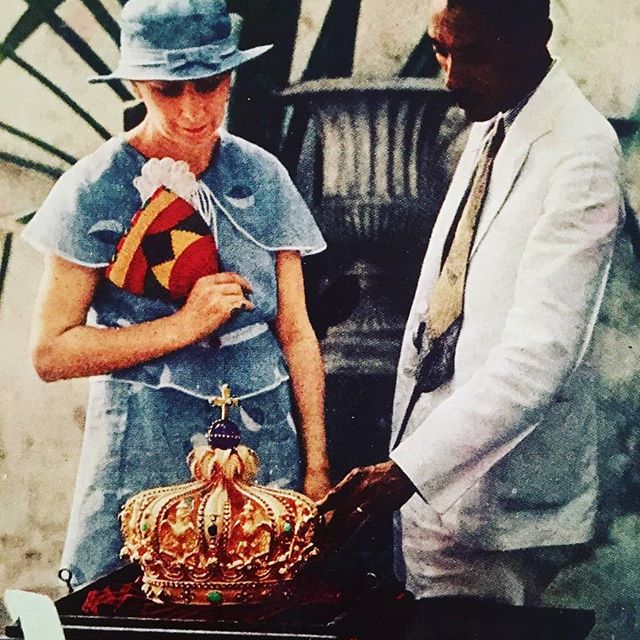
Proclaimed as Emperor Faustin I, by the Senate and the Chamber of Deputies, and assumed the style of His Imperial Majesty, 26 August 1849. Crowned at Port-au-Prince, by the Abbe Cessens according to Episcopalian (Franc-Catholique) rites, 18 April 1852. Attempted to conquer, but failed to take, Santo Domingo in 1856. Founded the Military Order of St Faustin and the Civil Haitian Order of the Legion of Honour, 21 September 1849. Also founded the Orders of St Mary Magdalen and St Anne, 31 March 1856. Deposed 15 January 1859.
Founded the Imperial Academy of Arts in 1856. Fled to the French legation, seeking asylum, but was later taken into exile in Jamaica, aboard a British warship 22 January 1859 (1). Married at Port-au-Prince, December 1849, H.I.M. Empress Adélina (b. ca. 1795), raised to the title of Empress of Haiti with the style of Her Imperial Majesty 26th August 1849, Crowned with her husband at Port-au-Prince 18th April 1852, daughter of Marie Michel Lévêque. After the death of her husband, Adélina fled to the Dominican Republic and then went to Spain, where she was received by the King of Spain himself. She remained at the Royal Palace of Spain in Madrid from 1868 to 1874.
Adélina then left for France and remained there from 1875 to 1877. She ended her days in Rome, Italy in 1879, until her death at the age of about 84 years. She was buried first in Rome near the Vatican and then in Haiti near her husband in 1907, 28 years after his death (*2).
Daughter: 1) H.I.H. Princess Célita Soulouque, m. Jean-Philippe Lubin, Count of Petionville, who was very rich. Together they had four children: three daughters and a son who died at birth. Adopted daughter: 2) H.S.H. Princess Geneviève Olive [Madame]. b. 1842 (quinze à seize ans in September 1858), d. 1936. Adopted by Emperor Faustin, raised to the title of Princess and granted the style of Her Serene Highness 1850. m. Amitié Lubin (b. ca. 1800), son of Jean Philippe Vil Lubin, Count de Pétion-Ville, by his wife, Elizabeth Ulcénie, née Amitié (*3). Princess Olive travelled around the world: France (1893-1894); Portugal (1894-1899) with her daughter Marie; Canada 1901; America (Philadelphia) (1902-1913); Dominican Republic (1913-1914); France (1914-1918); Dominican Republic (1918-1923); Thailand (1923-1927) as a guest of a friend of the Royal Family; Australia (1927-1929); Haiti 1929-1936) (*4) [Oliva Soulouque, Biografia].
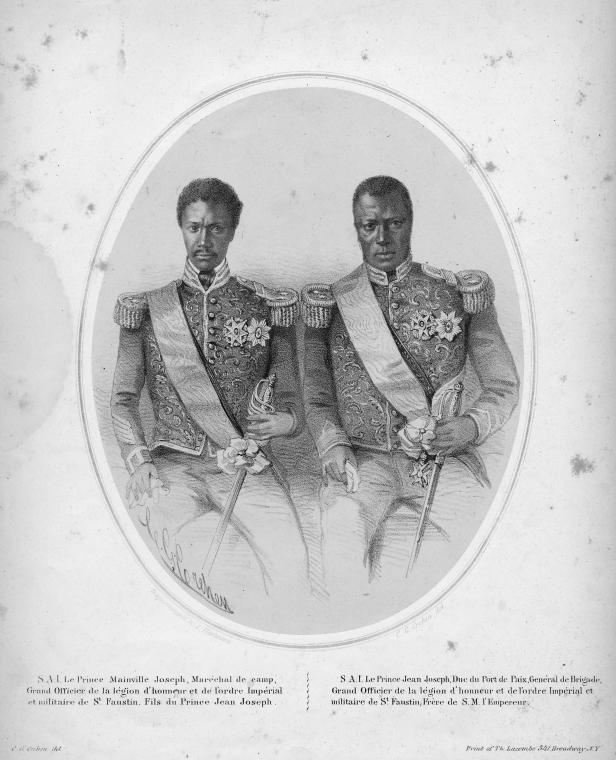
IIb. (Prince) Jean-Joseph Soulouque. He d. after 1850, having had issue, eleven sons and daughters, including:
H.I.M. (Prince) Mainville-Joseph Soulouque, pretender under the name Joseph I, m. 1854 with Princess Olive (IIa,2). He did participate in some attempts to restore the monarchy in Haiti, without success and d. in 1891. Children:
(a) “S.A.S. la princesse” Maria Soulouque, d. Portugal 1899. (b) H.I.M. (Prince) Joseph Soulouque, “prince impérial”, pretender to the throne as Joseph II, left for France with his mother in 1914, fought for the Allies in WWI, returned to the Dominican Republic in 1918 and lived there until his death on 18 June 1922. In 1930 Princess Geneviève Olive received a letter from the new pretender to the throne, her great grandson of 31 years told her that his wife was pregnant. Their names are unknown. (c) “S.A.S. le prince” Faustin-Joseph Soulouque, lived in the United States (Philadelphia) until his death in 1913. (d) Marie Adelina Soulouque, daughter of Mainville-Joseph Soulouque with Marie d’Albert. Daughter: Marie Adelina Soulouque, who married Johan Carl Sictus Weijgel Quast (*1), pharmacist [Santa Domingo].
Sources
(*1) Website of Chistopher Buyers
(*2) A website no longer online: ayudamosconocer.
(*3) Roman Catholic Church Kingston (Jamaica) Marriages 1839-1869. Act of marriage: Pierre Joseph Amitie Vil Lubin, native of Haiti, lawful son of His Lordship Earl Philippe Vil Lubin and by his wife, Elizabeth Ulcénie. Lord Amitie Vil Lubin, maried on 26 December 1861 HSH Princess Geneviève Olive Soulouque, native of Haiti, lawful daughter of Emperor Faustin Elie Soulouque and Empress Adélina Lévêque. Witnesses: Alexandre Bravo, Charles Grant, widow Lubin, Amitie Lubin, widow of Louis Lubin, Elizabeth Grant, James Male, Jean Baptiste Vil Lubin, George Clermont, A.M. Lhoste, Felicite Faustin, Ameisima Amitie, Elina Mainvaille, L. Bedonet, Elizabeth Bourke, Caroline Crosswell. Source: website of Thierry Jean-Baptiste Soulouque Vil Lubin.
(*4) A deleted website: ayudamosconocer.
Literature
– Constitutions of the World from the late 18th Century to the Middle of the 19th Century, The Americas. Multi-volumed work Constitutions of the World from the late 18th Century to the Middle of the 19th Century Sources on the Rise of Modern Constitutionalism / Quellen zur Herausbildung des modernen Konstitutionalismus. Ed. by Dippel, Horst The Americas Vol. 10 Constitutional Documents of Haiti 1790–1860 / Documents constitutionnels d’Haïti 1790-1860 / Verfassungsdokumente Haitis 1790-1860 Ed. by Dubois, Laurent / Gaffield, Julia / Acacia, Michel
– Hartog, [dr.] Johan Curaçao; From Colonial dependence to autonomy. Oranjestad, Aruba: De Wit publishers 1968 (Faustin’s exile on the island of Curaçao)
Note
There exists a nonsensical family tree on MyHeritage, created by a person named Alan Horain. Some parts have been copied from Christopher Buyers’ website Royal Ark. Horain’s website has some real people but concocted most of it. Horain has made Faustin’s mother, Marie-Catherine Soulouque, a sister of Henry I. Impossible. She was a black slave born at Port-au-Prince, Saint-Domingue, 1744. Henry was born on Grenada, 6th October 1767 to Christophe, a freeman. Horain’s website tried to fudge the enormous age difference by giving her birthdate as 1755. Princess Françoise-Améthyste Henry and Princess Anne-Athénaïre Henry were taken to England by her mother in 1821 and settled in Italy in 1824, and domiciled at Pisa, 1831 and 1839 respectively. The family is mentioned in contemporary accounts in both places, so quite impossible to be in Haiti, having children with Faustin and Prince Jean-Joseph. The photographs of the people in the family tree are not real. The family tree is a deliberate falsification and should be removed from MyHeritage.